Why Are Black Women Returning to Relaxers? Experts Explain
Why Are Black Women Returning To Relaxers? The Experts Are Sounding Off
- Relaxers offer manageability, especially for short hairstyles, when applied properly by a skilled stylist.
- Relaxed hair is not inherently less healthy than natural hair - proper care and maintenance are key.
- Consulting a professional is crucial before deciding on a relaxer to ensure it aligns with one's hair goals and health.
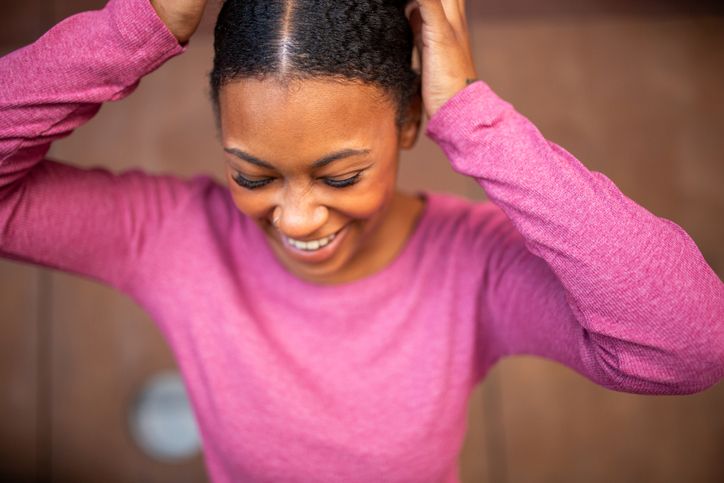
I’ve been a part of the natural hair community since late 2015. Like many, I steered away from the big chop and instead cut off my relaxed hair gradually. Once fully natural, tending to my hair came with plenty of trial and error—from learning proper detangling techniques to figuring out how to retain moisture. Still, while some Black women love the idea of flexing a natural mane, many are returning to relaxers.
The return to relaxers is not complex
Let’s not get it twisted—the natural hair movement continues to evolve, thanks to social media communities, natural hair festivals, textured haircare brands, and more. Many women continue to celebrate growing and maintaining healthy natural manes while also sharing their frustrations with a process that doesn’t always align with their lifestyles.
“It comes down to a couple of things,” master hairstylist Aaron Tracey Whitaker tells HelloBeautiful. “First, manageability—women are getting more educated on what relaxers actually do, and when you’ve got a stylist who can execute it right, that makes a huge difference. Second, short hairstyles are really in right now, and relaxing the hair tends to make those short cuts look more polished.”
With former naturals returning to relaxers, some may interpret the shift as a sign that Black women have negative feelings about their natural hair. But according to Aaron, it’s about education and making more informed decisions. Simply put, Black women have the freedom to wear their hair however they want, whether natural or relaxed, without having to subscribe to one particular belief about what their hair should look like.
Is natural hair healthier than relaxed hair?
With that education also comes the need to dispel the belief that natural hair is inherently healthier than relaxed hair. “The ‘relaxed hair is inherently less healthy’ belief isn’t really accurate on its own, and it depends heavily on how the relaxer is applied, how often, and by whom,” Aaron shares.
In fact, Aaron doesn’t subscribe to the old-school belief of relaxing hair every four to six weeks. Instead, he considers everything from a client’s hair growth rate to their texture. “Some of my clients get relaxers once a year, while others get them three or four times a year. It really depends on the individual,” he says. “I rotate the starting quadrant each time; if I start in the right rear section one visit, I’ll start in the left rear the next time. This allows each area of the head to get an even, consistent amount of processing rather than one section being overworked.”
Although the idea of returning to relaxers may seem ideal, there are multiple things to consider before making the jump. Published hairstylist Jachelle Whiting shares that it actually starts with considering your lifestyle. “Consider whether you’re willing to commit to the maintenance that comes with relaxed hair,” she says. “Most importantly, make sure your hair is healthy and consult with a licensed professional to determine if a relaxer is the right choice for you.”
Aaron agrees, noting that anyone with textured hair who wants a relaxer can get one; it ultimately comes down to their hair goals.
The steps for maintaining a healthy relaxed mane
Both Aaron and Jachelle agree that taking care of relaxed hair requires dedication to a consistent routine, along with the help of a trusted stylist. “Always start the process with a pre-chemical treatment and base cream like the Design Essentials Restored Vitamin Treatment ($20.46, Amazon.com) and the Design Essentials Scalp Care Anti-Itch & Tension Relief Scalp Butter ($12.99, Designessentials.com) to coat previously relaxed hair before processing,” he says. From there, Aaron says only new growth should be treated and that going longer between treatments can help prevent overprocessing.
Between relaxers, Aaron recommends using a nourishing conditioner to help maintain the hair’s strength and address damage from previous treatments. He also recommends washing every two weeks to preserve the hair’s integrity.
Jachelle shares that while relaxed hair is not low-maintenance, adhering to proper care practices, including regular trims, can help keep your mane healthy and in shape.
Consider the research on chemical hair relaxers and draw your own conclusion
Still, maintaining healthy-looking relaxed hair is only part of the conversation. Before deciding whether a relaxer is right for you, it’s also important to understand the potential health concerns associated with chemical relaxers and do your own research.
Unfortunately, some studies have found that long-term chemical hair relaxer use in postmenopausal Black women is associated with an increased risk of uterine cancer. Other studies have reported scalp and hair-related effects—including dandruff, hair loss, thinning and weakening—among women who use chemical hair relaxers. Despite these concerns, women who choose to use hair relaxers can turn to licensed stylists to help maintain their hair health.
For Aaron, his 20-plus years of work with Design Essentials have provided insight into how some brands approach the hair-relaxer game. “The brand has spent more than 35 years continually improving its relaxer systems with a focus on performance and healthier hair,” he says. As such, he believes that when relaxers are applied correctly with quality products and proper maintenance, healthy hair is the result.
“I want Black women to know that relaxers in 2026 aren’t the same conversation they were in the ‘80s and ‘90s,” Jachelle adds. “Hair care has evolved.” However, she shares that it’s important to remember that there is not a one-size-fits-all approach to hair relaxers. Genetics and overall hair health play a role in your journey, so tapping in with a hairstylist is key.
Why Are Black Women Returning To Relaxers? The Experts Are Sounding Off was originally published on hellobeautiful.com


